
Do Joint Supplements Work? 7 Checks to Run on Any Bottle
The honest answer is mixed, and it depends on the bottle. These seven checks help you sort one product from another.
The evidence on joint supplements is mixed. A 2018 NCCIH analysis of 29 studies found glucosamine or chondroitin alone reduced global pain, but the combination did not. Major guidelines disagree. Check each bottle's claim, amounts, form and safety facts. No supplement is FDA approved or a treatment for any disease.
- Key facts
- Check 1: What does the bottle claim to do?
- Check 2: Is every ingredient shown with an amount?
- Check 3: How do the amounts compare with studies?
- Check 4: Which form of the ingredient is it?
- Check 5: Are the plant extracts standardised?
- Check 6: What are the safety and interaction facts?
- Check 7: What does the seller promise, and what can you check?
- What should you ask your doctor before starting one?
- How do you keep your own record?
- Frequently asked questions
- Our view
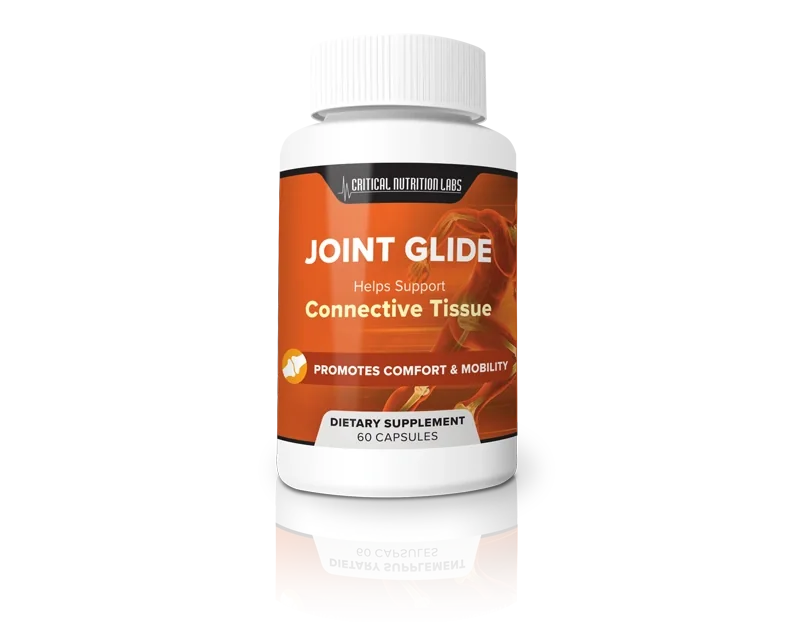
Joint Glide is the worked example, not a promise. Checkout shows its price and the refund window.
See today's price and guaranteeEarnings disclosure: Thejointglide is the U.S. stocking partner for Joint Glide and earns a commission on orders placed through this site.Key facts
- Evidence is mixed. Major guidelines disagree with each other about use.
- NCCIH, 2018: an analysis of 29 studies found pain reduced by glucosamine or chondroitin separately, but not by the combination.
- Form matters: NCCIH notes prescription glucosamine sulfate performed more favourably than other forms.
- Amounts matter: most glucosamine trials used 1,500 mg a day.
- No supplement is FDA approved. None is a treatment for arthritis or any disease.
- Joint Glide is used here as a worked example only.
Joint Glide is a dietary supplement. It is not FDA approved, and no supplement is. It is not meant to diagnose, treat, cure or prevent any disease. This page is general information, not medical advice. Ask your doctor or pharmacist about your own case.
Check 1: What does the bottle claim to do?
Start with the words on the front. A careful label uses support language and names no disease. Joint Glide, for example, says Helps Support Connective Tissue and Promotes Comfort & Mobility.
A label that says it treats, cures or reverses a condition is making a drug claim. That is a drug-style claim, and this site will not repeat such claims. If you want to know whether a supplement can help a joint condition such as arthritis, ask your doctor.
Check 2: Is every ingredient shown with an amount?
A full panel lists each ingredient and its amount per serving. A proprietary blend lists one total and hides the split.
Joint Glide shows ten ingredients and ten amounts. That lets you compare each amount with research. A blend makes that impossible, because the last ingredient could be a trace.
If a bottle has no panel to look at, ask for a photo before you buy.
Check 3: How do the amounts compare with studies?
This is the check most people skip. A label can list an ingredient that has been studied, at a fraction of the studied dose.
| Ingredient | Printed per serving | Studied |
|---|---|---|
| Glucosamine hydrochloride | 200 mg | 1,500 mg a day in most trials |
| MSM | 300 mg | Between 1.5 and 6 grams daily in knee trials |
| Pine bark extract | 150 mg | 100 to 200 mg commonly studied |
| Black pepper extract | 10 mg | 5 to 20 mg typical |
Match the numbers on any bottle against the numbers in trials. If a trial figure is not available, say so and move on.
Check 4: Which form of the ingredient is it?
Forms differ. The NCCIH notes that prescription glucosamine sulfate performed more favourably than other formulations. Joint Glide contains glucosamine hydrochloride.
That does not make the product bad. It means a result on one form cannot be assumed for another. Ask whether the form on your bottle is the form that was studied.
Check 5: Are the plant extracts standardised?
A plant extract is only comparable when the label gives a marker percentage. Joint Glide does this for pine bark (95% proanthocyanidins) and black pepper (95% piperine).
It does not for devil's claw, where the research uses a marker called harpagoside, or for white willow bark, where the marker is salicin. Without a percentage, 500 mg of powder or 150 mg of extract cannot be matched to a trial.
Check 6: What are the safety and interaction facts?
Natural does not mean harmless. White willow bark, for example, carries cautions from Memorial Sloan Kettering: keep away from it if you take warfarin or other blood thinners or NSAIDs, and if aspirin, asthma or ulcers are part of your history. Keep it from children.
Shellfish allergy matters because shellfish is a common source of glucosamine. Read the allergen line. Joint Glide prints Soy Free and says nothing about shellfish.
Show the panel to a pharmacist. Because the amounts are printed, they can give you a real answer.
Check 7: What does the seller promise, and what can you check?
Look for a clear refund window, a phone number and an address. Joint Glide offers 60 days from purchase, a phone line and a returns address.
Look for proof behind the marks. Lab Tested and Doctor Formulated need a laboratory and a named doctor. Neither was published for Joint Glide.
Then ask your doctor. A supplement is one choice among many, and your own health history changes the answer.
What should you ask your doctor before starting one?
- Do any of my medicines clash with any ingredient on this panel?
- Do I have an allergy that matters, such as shellfish for glucosamine?
- Is a supplement sensible for my situation, or is something else a better first step?
- How long should I try it, and what would tell us it is not helping?
- Should I have any tests or follow-ups while I take it?
Bring the printed panel and a list of everything else you take. Doctors can give a far better answer when the amounts are in front of them.
How do you keep your own record?
Evidence from other people only goes so far. Your own note is the one result that applies to you.
Write a baseline in plain words on day one. Add a weekly line. Note any new medicine, new activity or change in diet. At the end, read the first line and the last. If the difference is not clear, the honest finding is that you cannot tell, and that is a fine answer.
Frequently asked questions
Do joint supplements work?
The evidence is mixed. A 2018 NCCIH analysis of 29 studies found glucosamine or chondroitin alone reduced global pain, but the combination did not. Major guidelines disagree.
Do joint supplements help arthritis?
This site cannot say that any supplement treats arthritis. The Joint Glide label names no disease. Ask your doctor about joint conditions.
Are joint supplements safe?
It depends on the ingredients and on you. Willow bark, for example, carries cautions with blood thinners and NSAIDs. Ask a doctor or pharmacist.
What do joint supplements do?
Labels use support language, such as helps support connective tissue. They do not promise to treat disease, and no supplement is FDA approved.
How do joint supplements work?
Each ingredient has its own proposed role, and evidence differs. A label rarely explains a mechanism, and Joint Glide's does not.
What should I check first on a joint supplement?
Check whether every ingredient has a printed amount, then compare those amounts with studied doses, then read the safety facts.
Our view
Do joint supplements work? For some people, maybe. For others, not noticeably. The research does not give one clean answer, and the guidelines do not agree.
So do not ask the category. Ask the bottle. Run the seven checks, write the answers down, and notice where a label goes quiet.
Joint Glide did well on disclosure and less well on dose. That is the pattern the checks are designed to reveal. Take your results to your doctor.
If the example made the label look worth a closer look, checkout shows the cost and the terms.
See today's price and guaranteeEarnings disclosure: Thejointglide is the U.S. stocking partner for Joint Glide and earns a commission on orders placed through this site.Last updated October 16, 2026. Written by Thejointglide Editorial Desk. Medically reviewed by Dr. Matthew Sloan, MD on October 16, 2026.
Keep reading: