
Is Joint Glide Safe? 7 Safety Checks Before the First Capsule
Safety depends on you, not just on the capsule. These seven checks cover the points a careful pharmacist would raise.
Safety depends on your health and your medicines. Joint Glide contains white willow bark extract, which Memorial Sloan Kettering advises avoiding with blood thinners, NSAIDs, aspirin sensitivity, asthma and ulcers. The label prints no caution panel and no shellfish statement. No supplement is FDA approved. Ask your doctor first.
- Key facts
- Check 1: Are you an adult?
- Check 2: Do you take warfarin or another blood thinner?
- Check 3: Do you use NSAIDs, or have asthma, ulcers or aspirin sensitivity?
- Check 4: Do you have a shellfish allergy?
- Check 5: How much copper and other minerals are you already taking?
- Check 6: What does the label leave out?
- Check 7: What should you do if something feels wrong?
- Which safety facts fit on one table?
- Frequently asked questions
- Our view
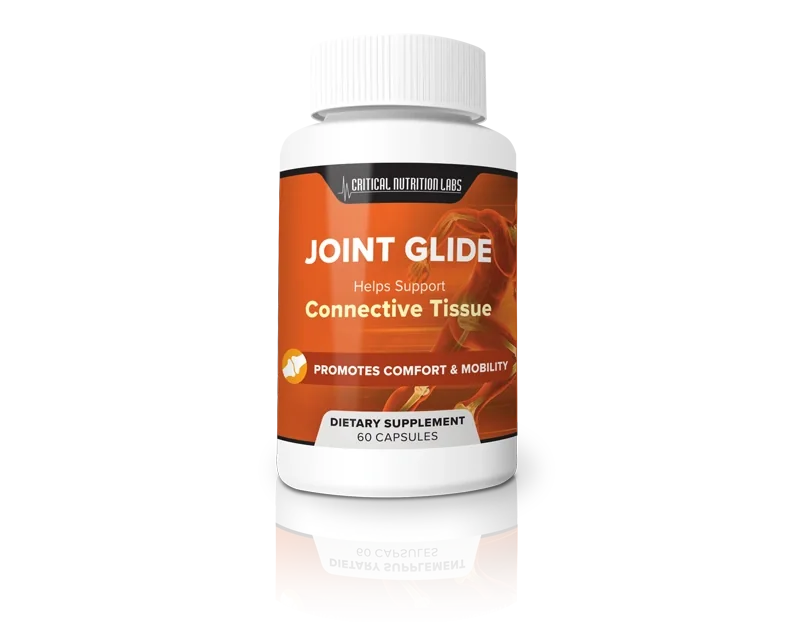
Only think about ordering after you have asked your doctor or pharmacist. Checkout shows the price and the guarantee.
See today's price and guaranteeEarnings disclosure: Thejointglide is the U.S. stocking partner for Joint Glide and earns a commission on orders placed through this site.Key facts
- Contains 150 mg of white willow bark extract. No salicin percentage is printed.
- Memorial Sloan Kettering: avoid willow bark with warfarin or other blood thinners and with NSAIDs.
- Also avoid if you are aspirin sensitive or have asthma or ulcers. Not for children.
- Shellfish is a common source of glucosamine. The label is silent on it.
- Each serving has 2 mg of copper, 222% of the Daily Value and far below the 10,000 mcg ceiling.
- The label prints no caution panel, no storage line and no pregnancy statement.
Joint Glide is a dietary supplement. It is not FDA approved, and no supplement is. It is not meant to diagnose, treat, cure or prevent any disease. This page is general information, not medical advice. Ask your doctor or pharmacist about your own case.
Check 1: Are you an adult?
The pack says adults 18 and over, so follow the label. The bottle itself prints no age limit.
Memorial Sloan Kettering adds a firm point about willow bark. Children should not be given it, because of Reye syndrome. Keep the bottle away from them.
Check 2: Do you take warfarin or another blood thinner?
This is the most serious check. Willow bark contains salicin, and aspirin was first made from salicin. Memorial Sloan Kettering says to avoid willow bark if you take warfarin or other blood thinners, because it may raise bleeding risk.
Each serving of Joint Glide holds 150 mg of white willow bark extract. If you take any blood thinner, stop here and speak to your doctor before you order.
Bring the Supplement Facts panel with you. Because every amount is printed, a clinician can judge it properly.
Check 3: Do you use NSAIDs, or have asthma, ulcers or aspirin sensitivity?
The same source advises against combining willow bark with NSAIDs, because of stomach damage. It also says to skip willow bark if you are sensitive to aspirin or have asthma or ulcers.
If you reach for anti-inflammatory tablets often, count that as a yes. Ask a pharmacist how they sit beside willow bark, and do not guess.
Check 4: Do you have a shellfish allergy?
Shellfish is a common source of glucosamine, and each serving of Joint Glide has 200 mg of the hydrochloride form. The label prints a Soy Free statement but says nothing about shellfish either way.
That is the gap we would most like closed. We do not know the source of the glucosamine in this product. If you have a shellfish allergy, ask your doctor and ask the order desk on +1 (727) 351-3065 before you buy. Keep the reply.
Check 5: How much copper and other minerals are you already taking?
Each serving carries four nutrients: B6 at 0.5 mg gives 29% of the Daily Value, magnesium at 100 mg gives 24%, zinc at 10 mg gives 91% and copper at 2 mg gives 222%.
Copper deserves a second look. For adults the NIH lists an RDA of 900 mcg and a ceiling of 10,000 mcg. The label's 2 mg works out at 2,000 mcg. That is well under the upper limit, but it is more than double the daily reference. If you take a multivitamin or other mineral supplements, add the copper up.
Zinc at 91% is also worth counting alongside anything else you take.
Check 6: What does the label leave out?
Three things you would normally expect are not on the bottle. There is no caution panel. There is no storage instruction. There is no pregnancy statement.
We will not write those for the maker and pass them off as theirs. We will say that everything in an ordinary caution block would apply here, and that willow bark makes the missing panel matter more.
Also missing are a salicin percentage and a harpagoside percentage. Without them you cannot measure your exposure.
Check 7: What should you do if something feels wrong?
Stop taking the capsules. Speak to a doctor or pharmacist. If symptoms are severe, get urgent care.
Do not wait for the bottle to run out. A refund can be sorted later by phone, so long as you are inside the 60 days.
Also remember that the label lists no side effects at all. A blank is not a promise that none exist. It means none were published to us.
Which safety facts fit on one table?
| Item | What to know | Source |
|---|---|---|
| White willow bark extract, 150 mg | Do not combine with warfarin, other blood thinners or NSAIDs. Also advised against in aspirin sensitivity, asthma and ulcers. Not for children. | Memorial Sloan Kettering |
| Glucosamine hydrochloride, 200 mg | Commonly made from shellfish. The label has no statement either way. | Label and our fact pack |
| Copper, 2 mg | 222% of the Daily Value. Adult RDA 900 mcg. Upper limit 10,000 mcg. | NIH |
| Caution panel | Not printed. No storage line. No pregnancy statement. | Label |
| Salicin percentage | Not published, so exposure cannot be estimated. | Label |
Print this table or photograph it, and bring it with the Supplement Facts panel to your appointment.
Frequently asked questions
Is Joint Glide safe?
That depends on your health and medicines. The capsule contains white willow bark extract, which carries real cautions from Memorial Sloan Kettering. Ask your doctor or pharmacist first. No supplement is FDA approved.
What are the side effects of Joint Glide?
No side-effect list was published to us. The cautions we know of come from named sources about willow bark, such as bleeding risk with blood thinners and stomach damage with NSAIDs.
Can I take Joint Glide with blood thinners?
Memorial Sloan Kettering advises against willow bark with warfarin or other blood thinners, because of bleeding risk. Joint Glide has 150 mg of it. Speak to your doctor first.
Is Joint Glide safe if I am allergic to shellfish?
We cannot say. Shellfish is a common source of glucosamine and the label says nothing about it. Ask your doctor and the order desk before you buy.
Is the copper level safe?
The 2 mg of copper equals 222% of the Daily Value and sits far below the NIH ceiling of 10,000 mcg. Add it to copper from other products you take.
Is Joint Glide safe in pregnancy or for children?
The label prints no pregnancy statement. Willow bark is not for children, because of Reye syndrome. Ask your doctor if you are pregnant or nursing.
Our view
Safe is a question about a person, not a product. For a healthy adult with no interacting medicines and no shellfish allergy, the printed amounts do not look extreme. For someone on a blood thinner or NSAIDs, the willow bark is the issue.
What we cannot fix is the silence on the label. A caution panel, a storage line and a word on shellfish would each help. Until they exist, the seven checks above are the best we can offer.
Show the panel to a pharmacist, and treat any yes in the checks as a reason to ask before you order.
If a clinician has said yes, you can look at the price and the 60-day refund window at checkout.
See today's price and guaranteeEarnings disclosure: Thejointglide is the U.S. stocking partner for Joint Glide and earns a commission on orders placed through this site.Last updated October 16, 2026. Written by Thejointglide Editorial Desk. Medically reviewed by Dr. Matthew Sloan, MD on October 16, 2026.
Keep reading: