
Vitamin B6, 0.5 mg
Given as pyridoxal 5'-phosphate. The label prints 29% of the Daily Value.
Ten lines, ten amounts. Here is each one, what it is, how it compares with research, and what the label does not say.
Joint Glide lists ten dietary ingredients per 2-capsule serving, each with an amount and no proprietary blend. Devil's claw root powder is largest at 500 mg. Glucosamine is 200 mg and MSM is 300 mg, both below doses used in trials. White willow bark is 150 mg, with no salicin percentage printed.
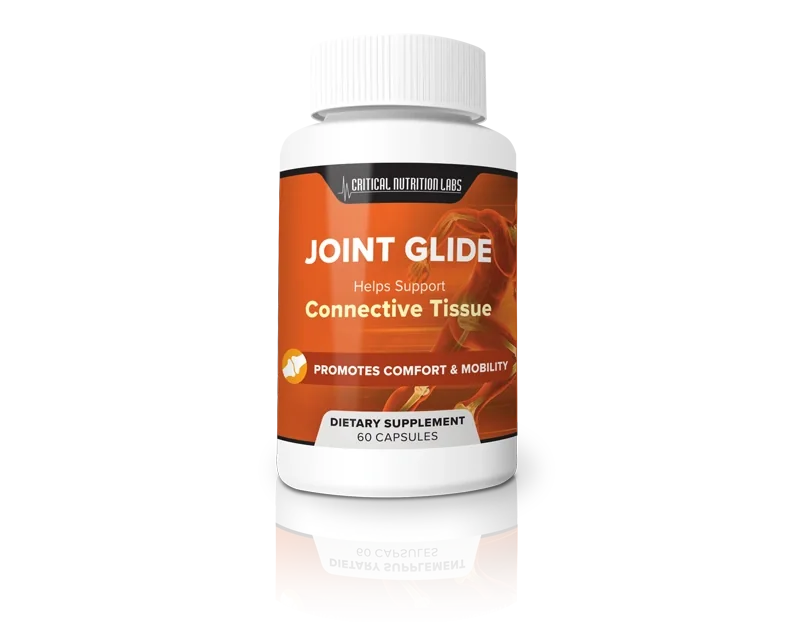
All ten amounts are on the label, so you can judge before you click. Checkout shows the price and the refund window.
See today's price and guaranteeEarnings disclosure: Thejointglide is the U.S. stocking partner for Joint Glide and earns a commission on orders placed through this site.Joint Glide is a dietary supplement. It is not FDA approved, and no supplement is. It is not meant to diagnose, treat, cure or prevent any disease. This page is general information, not medical advice. Ask your doctor or pharmacist about your own case.
Look for three things. First, does each ingredient have a number? Second, does a blend hide any of them? Third, does the serving size match how you will really take it?
On Joint Glide the answers are good. All ten have numbers. No blend exists. The serving is 2 capsules, which is also the suggested use. That makes the rest of this page possible, because we can compare each printed amount with what studies used.
The first four lines are plain nutrients, each with a percent Daily Value.
Given as pyridoxal 5'-phosphate. The label prints 29% of the Daily Value.
Given as magnesium amino acid chelate. The label prints 24%.
Given as zinc amino acid chelate. The label prints 91%.
Given as copper amino acid chelate. The label prints 222%.
We recalculated all four percentages against the FDA's figures and all four are right. The one to remember is copper. At 2 mg, which is 2,000 mcg, it is 222% of the Daily Value. The NIH puts the adult RDA at 900 mcg and the upper limit at 10,000 mcg. The printed amount sits far below that ceiling, yet it is over double the daily reference. Count copper from other supplements too.
Organic devil's claw powder (Harpagophytum procumbens, root) is 500 mg. It is the largest ingredient in the capsule. The panel puts it first for that reason.
Here is the catch. A graphic from the brand, called Inside Joint Glide, draws five ingredients, and devil's claw is missing from it. The panel is the rule, so we follow the panel.
The research on devil's claw is usually written in terms of a marker called harpagoside. No harpagoside percentage is printed. So we cannot compare 500 mg of root powder with any trial dose. That is a gap, not a verdict.
MSM is 300 mg. Most knee trials gave between 1.5 and 6 grams daily. Against the bottom of that range, 300 mg is about a fifth.
Glucosamine hydrochloride is 200 mg. Most glucosamine trials used 1,500 mg a day, so 200 mg is about an eighth. The NCCIH also notes that prescription glucosamine sulfate did better than other forms, and this product uses the hydrochloride.
A low dose is not a hidden dose. The label is honest about what is inside. The point is only that you should not assume a studied result carries over to a smaller amount.
Pine bark extract (Pinus massoniana) is 150 mg, standardised to 95% proanthocyanidins. The usual studied range is 100 to 200 mg, so this is the best-matched line on the label.
White willow bark extract is 150 mg. No salicin percentage is printed. Salicin is the compound behind every caution about willow bark, so without a percentage the exposure cannot be estimated.
Black pepper extract (fruit) is 10 mg, standardised to 95% piperine. Typical amounts run 5 to 20 mg, which fits its use as an absorption aid rather than as a main active.
| Ingredient | Amount | % DV | Note |
|---|---|---|---|
| Vitamin B6 (pyridoxal 5'-phosphate) | 0.5 mg | 29% | Recalculated and correct |
| Magnesium (amino acid chelate) | 100 mg | 24% | Recalculated and correct |
| Zinc (amino acid chelate) | 10 mg | 91% | Recalculated and correct |
| Copper (amino acid chelate) | 2 mg | 222% | Under the 10,000 mcg upper limit |
| Organic devil's claw powder (root) | 500 mg | Not established | No harpagoside percentage |
| MSM | 300 mg | Not established | Studied range is far higher |
| Glucosamine hydrochloride | 200 mg | Not established | About 13% of the usual trial dose |
| Pine bark extract | 150 mg | Not established | 95% proanthocyanidins |
| White willow bark extract | 150 mg | Not established | No salicin percentage |
| Black pepper extract (fruit) | 10 mg | Not established | 95% piperine |
Willow bark is the main reason. Memorial Sloan Kettering advises avoiding it if you take warfarin or other blood thinners, because of bleeding risk. It also advises against combining it with NSAIDs, which can harm the stomach, and against use if you are sensitive to aspirin, or have asthma or ulcers. Children should not have it, because of Reye syndrome.
The label prints no caution panel, so none of this is on the bottle. If any of it applies to you, talk to your doctor or pharmacist before the first capsule. If you have a shellfish allergy, note that shellfish is a common source of glucosamine and the label stays silent on it.
Ten dietary ingredients per 2-capsule serving: vitamin B6, magnesium, zinc, copper, organic devil's claw root powder, MSM, glucosamine hydrochloride, black pepper extract, white willow bark extract and pine bark extract. Other ingredients are cellulose (vegetable capsule) and olive oil.
No. Every one of the ten ingredients has its own printed amount, so nothing is hidden inside a blend total.
200 mg per 2-capsule serving, as glucosamine hydrochloride. Trials generally used 1,500 mg a day, so the printed amount is about 13% of that.
No. Devil's claw root powder at 500 mg is the largest amount on the panel, but the brand's own ingredient graphic leaves it out. The panel governs.
Yes. We recalculated all four against the FDA's figures: B6 29%, magnesium 24%, zinc 91% and copper 222%. All are correctly rounded.
No. Shellfish is a common source of glucosamine, and the label prints Soy Free but nothing on shellfish. Ask your doctor and the order desk if this matters to you.
This is a better-disclosed label than most. Ten ingredients, ten amounts, four correct percentages and no blend. We give that full marks.
The weak spot is dose. Glucosamine and MSM are printed well below the amounts studies used, and the two botanicals with the loudest cautions or claims carry no marker percentage. The strongest match is pine bark.
So read the capsule as what it is: a mixed formula with honest numbers and modest amounts. Check the interaction facts with a pharmacist, then decide.
Read the ten lines and still interested? The price and the 60-day guarantee are one click away.
See today's price and guaranteeEarnings disclosure: Thejointglide is the U.S. stocking partner for Joint Glide and earns a commission on orders placed through this site.Last updated October 16, 2026. Written by Thejointglide Editorial Desk. Medically reviewed by Dr. Matthew Sloan, MD on October 16, 2026.
Keep reading: