
Joint Glide and Arthritis: 4 Checks Before You Rely on a Supplement
Many people type Joint Glide arthritis into a search box. The label never uses that word.
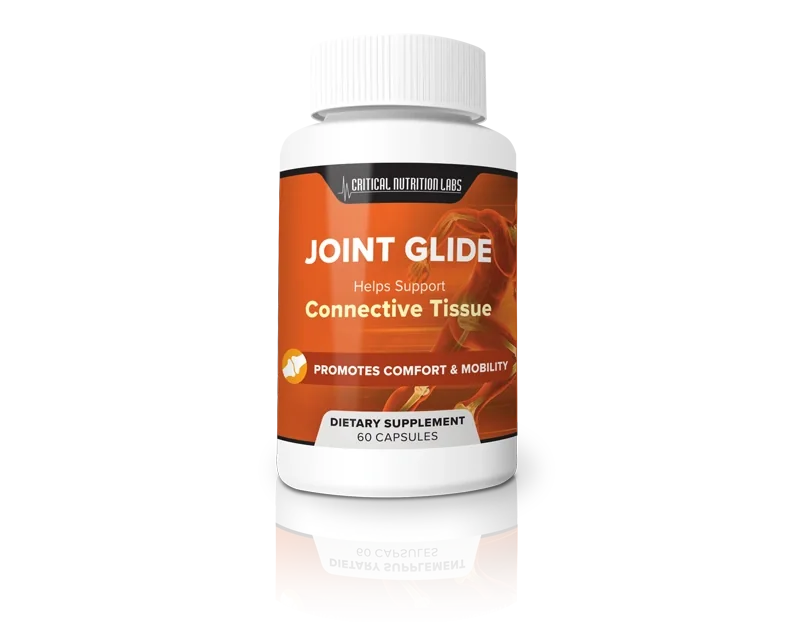
Joint Glide names no disease. The label says Helps Support Connective Tissue and Promotes Comfort & Mobility, and it makes no claim to cure, treat or prevent anything. Research on its ingredients is mixed. If you have arthritis, your doctor decides your care, and a supplement does not replace that.
- Key facts
- Check 1: Does the label say anything about arthritis?
- Check 2: What does research say about glucosamine and joint problems?
- Check 3: What about willow bark and devil's claw?
- Check 4: What should you do if you already treat arthritis?
- What should you bring to the appointment?
- What does the arthritis picture look like in one table?
- Frequently asked questions
- Our view
Talked it over with your doctor? Checkout shows the price and the 60-day guarantee.
See today's price and guaranteeEarnings disclosure: Thejointglide is the U.S. stocking partner for Joint Glide and earns a commission on orders placed through this site.Key facts
- No disease is named anywhere on the pack.
- Joint Glide is a dietary supplement. It is not FDA approved, and no supplement is.
- NCCIH reports mixed findings on glucosamine in knee osteoarthritis.
- Memorial Sloan Kettering says trials suggest willow bark extract works for back pain, with mixed results for osteoarthritis.
- Willow bark has cautions with blood thinners, NSAIDs and aspirin sensitivity.
- Joint pain with swelling, heat or fever needs a clinician.
Joint Glide is a dietary supplement. It is not FDA approved, and no supplement is. It is not meant to diagnose, treat, cure or prevent any disease. This page is general information, not medical advice. Ask your doctor or pharmacist about your own case.
Check 1: Does the label say anything about arthritis?
Nothing. The bottle and the listing do not name arthritis, osteoarthritis or any other disease. That is deliberate and it is correct. A supplement may describe an effect on a normal body structure. It may not say it treats a disease.
Joint Glide uses that safe lane: Helps Support Connective Tissue, Promotes Comfort & Mobility. Neither phrase says relieve, heal or cure. We keep the same line. We do not call this product a treatment for arthritis, and you should be wary of any page that does.
The phrase searchers use, joint glide arthritis, comes from the reader, not from the bottle.
Check 2: What does research say about glucosamine and joint problems?
The one research summary our sources name comes from NCCIH. Its 2018 pooled look at 29 trials of knee osteoarthritis found a significant drop in pain for glucosamine alone and for chondroitin alone. Taking both gave no such drop.
NCCIH adds that guidelines pull in different directions. Some bodies advise against use and others see a possible benefit. That is a split among experts, not a clear answer.
Now look at the capsule. It prints glucosamine at 200 mg, while trials generally used about 1,500 mg a day. It has no chondroitin. So the research does not map neatly onto this product.
Check 3: What about willow bark and devil's claw?
Memorial Sloan Kettering writes that trials point to a benefit of willow bark extract for back pain, with mixed results where osteoarthritis is concerned. The capsule holds 150 mg of white willow bark extract, with no salicin share printed, so the dose cannot be matched to those trials.
Devil's claw is the biggest line at 500 mg of root powder. No marker percentage is printed, and the research is usually written in that marker. So a like-for-like comparison is not possible.
Both plants carry cautions that matter more to people with joint problems than to others. Willow bark should not be mixed with NSAIDs or blood thinners, and devil's claw is traditionally cautioned in people with ulcers.
Check 4: What should you do if you already treat arthritis?
Start with your own care plan. If you take prescribed medicine, an over-the-counter NSAID or a blood thinner, show the panel to your pharmacist before you add Joint Glide. Ask about the willow bark in particular.
Tell your doctor what you plan to take, and why. A short list works: the product name, the two-capsule serving and the ten amounts. Because nothing is hidden in a blend, they can give a direct answer.
Be careful with your own judgement of results. Joint pain has a large placebo response. Feeling better after some weeks fits a working capsule, but it also fits the placebo response and the normal ups and downs of joint symptoms.
Seek care promptly for pain that keeps worsening, or that arrives with swelling, heat or fever. Do not wait for a bottle to run out.
What should you bring to the appointment?
A short page makes the visit better. Bring the list below and ask your doctor or pharmacist to read it with you.
- The product name and the serving: Joint Glide, 2 capsules each morning.
- A photo of the panel with all ten printed amounts.
- Every medicine you use, including pain relievers you buy without a prescription.
- Any allergies, shellfish first of all.
- Any ulcer, asthma or bleeding history.
Because the label has no hidden blend, the person across the desk can see exactly what you would take. That saves time and gives you a better answer.
What does the arthritis picture look like in one table?
| Topic | Position |
|---|---|
| Disease named on pack | None |
| Treatment claim | None, and none from us |
| Research on glucosamine | Mixed, per NCCIH |
| Research on willow bark | Mixed for osteoarthritis, per Memorial Sloan Kettering |
| Dose match to trials | Glucosamine and MSM far under; pine bark inside range |
| Who should check first | Anyone on blood thinners, NSAIDs or aspirin |
| Who decides your care | Your doctor |
Frequently asked questions
Is Joint Glide good for arthritis?
The label names no disease, and it does not claim to treat one. Research on its ingredients is mixed. Ask your doctor about arthritis care.
Do joint supplements help arthritis?
Evidence is mixed. NCCIH reports pain fell in a 2018 analysis with glucosamine or chondroitin taken separately, while guidelines disagree on use.
Can I take Joint Glide with arthritis medicine?
Ask a pharmacist first. White willow bark has cautions with NSAIDs and blood thinners, and the label gives no caution panel.
Does willow bark help osteoarthritis?
Memorial Sloan Kettering says trials suggest it works for back pain and results are mixed for osteoarthritis. The salicin share in Joint Glide is not published.
Is Joint Glide FDA approved for arthritis?
No. It is a dietary supplement, and no supplement is FDA approved. It makes no arthritis claim.
When should I see a doctor about joint pain?
See one if pain is new, severe or worsening, or comes with swelling, heat or fever.
Our view
The arthritis question has a short, honest answer. This product claims nothing about arthritis, and neither do we.
The research behind its ingredients is mixed, and the doses on the label differ from what the studies used. That does not stop a person from trying it. It does mean the capsule is a side habit, not a plan.
Keep your doctor at the centre. If your doctor and pharmacist are comfortable, one bottle plus a clear decision date is a measured way to try it.
Informed and still interested? See today's price and guarantee at checkout.
See today's price and guaranteeEarnings disclosure: Thejointglide is the U.S. stocking partner for Joint Glide and earns a commission on orders placed through this site.Last updated October 16, 2026. Written by Thejointglide Editorial Desk. Medically reviewed by Dr. Matthew Sloan, MD on October 16, 2026.
Keep reading: