
Joint Glide Glucosamine: 5 Checks on the 200 mg Per Serving
Glucosamine is the best-known name on the Joint Glide label. Five checks show what the number means.
Joint Glide lists glucosamine hydrochloride at 200 mg per 2-capsule serving. Most glucosamine trials used about 1,500 mg a day, so the capsule prints roughly an eighth of that. NCCIH reports mixed findings, and the label carries no shellfish statement. Read the five checks before you decide.
- Key facts
- Check 1: What does the label print for glucosamine?
- Check 2: How does 200 mg compare with the trial dose?
- Check 3: Does the hydrochloride form matter?
- Check 4: What does NCCIH say about glucosamine overall?
- Check 5: Is shellfish a problem with this glucosamine?
- What do the glucosamine facts look like in one table?
- Frequently asked questions
- Our view
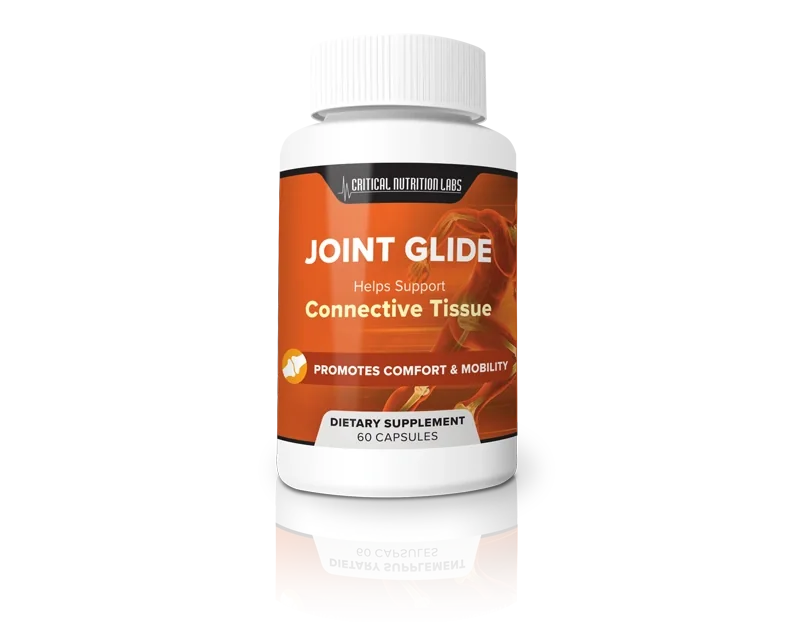
Glucosamine at 200 mg, printed in plain view. Checkout shows the price and the 60-day guarantee.
See today's price and guaranteeEarnings disclosure: Thejointglide is the U.S. stocking partner for Joint Glide and earns a commission on orders placed through this site.Key facts
- Printed: glucosamine hydrochloride, 200 mg per serving of 2 capsules.
- Trial dose quoted on our site: 1,500 mg a day, so the capsule is about 13% of it.
- NCCIH says prescription glucosamine sulfate fared best in studies. This capsule uses hydrochloride, a different form.
- A 2018 analysis of 29 knee studies found pain fell with glucosamine or chondroitin separately, not with the two together.
- Glucosamine is commonly made from shellfish. The label has no shellfish line.
- No chondroitin appears on the panel.
Joint Glide is a dietary supplement. It is not FDA approved, and no supplement is. It is not meant to diagnose, treat, cure or prevent any disease. This page is general information, not medical advice. Ask your doctor or pharmacist about your own case.
Check 1: What does the label print for glucosamine?
The panel names it Glucosamine Hydrochloride. The amount is 200 mg for each serving of two capsules. It carries a double asterisk, which means no Daily Value is set for it.
It sits third by weight among the six non-nutrient lines, below the devil's claw root powder at 500 mg and the MSM at 300 mg. It is not the biggest item in the capsule. It is only the best-known one, and that is why searches for joint glide glucosamine are common.
Remember that the number is per serving. Two capsules carry 200 mg together, so one capsule carries 100 mg.
The line carries no standardisation note. Two other lines, pine bark extract and black pepper extract, do print one, each set at 95% of a named compound.
Check 2: How does 200 mg compare with the trial dose?
Our how-it-works page quotes a trial figure of 1,500 mg a day for glucosamine. Set 200 beside 1,500 and the capsule comes to about 13%, or one eighth.
That gap is not a secret. The label itself lets you work it out, because every amount is printed. Many joint labels pool their ingredients under one total, which hides this sum.
Why is the gap there? A two-capsule serving has limited room. Studied doses of glucosamine take up a large share of it. A formula with ten ingredients cannot give full trial doses to all of them. The maker chose breadth over a single full dose.
We do not say that makes the capsule useless. No trial of this exact formula was published to us, so nobody can say what smaller doses of several ingredients do together.
Check 3: Does the hydrochloride form matter?
NCCIH observes that prescription glucosamine sulfate fared better in studies than other formulations did. It adds a warning that bias, not a real difference, could explain part of it.
Joint Glide uses the hydrochloride form. So the best-looking results in the research may not carry over to it. The label does not say which form was used in the trials behind the 1,500 mg figure, and we make no claim either way.
The simple takeaway is this. Form and dose both matter when you read glucosamine research. This capsule differs from the headline studies on both counts.
Check 4: What does NCCIH say about glucosamine overall?
NCCIH points to a pooled 2018 review that covered 29 knee studies. Glucosamine on its own and chondroitin on its own each cut overall pain by a significant margin. The two together did not.
The same summary says expert groups split. The ACR with the Arthritis Foundation, and OARSI, advise against use. AAOS and ESCEO leave room for a possible benefit.
So even a full-dose glucosamine product sits in a contested area. A product with a smaller dose is further from an uncertain result, not further from a proven one. That is the fair way to put it.
Note too that this capsule has no chondroitin on its panel. The 2018 finding about the pair does not describe it.
Check 5: Is shellfish a problem with this glucosamine?
Glucosamine is commonly made from the shells of crustaceans. Vegetarian sources exist, so it is not always so. The Joint Glide label does not tell you which kind it uses.
The label does print Soy Free. Because one allergen was thought through, the missing shellfish line stands out. With a shellfish allergy, ring the order desk at +1 (727) 351-3065 and put the question to them. Your doctor should also hear about it.
Do not lean on the vegetarian mark. It describes the capsule shell, not the glucosamine inside.
Write your question down before you call. Ask: what is the source of the glucosamine in this bottle, and can you confirm it in writing? If the desk cannot answer, treat that as an answer.
What do the glucosamine facts look like in one table?
| Item | Fact | Source |
|---|---|---|
| Printed on the label | Glucosamine hydrochloride, 200 mg per serving | Supplement Facts panel |
| Daily trial dose quoted | 1,500 mg | Our how-it-works page |
| Share of trial dose | About 13% | Plain division |
| Form in the best-looking studies | Prescription glucosamine sulfate | NCCIH |
| Overall research picture | Mixed, with guidelines in disagreement | NCCIH |
| Shellfish statement | Not printed | Label |
Frequently asked questions
What is the glucosamine dose in Joint Glide?
The panel prints 200 mg of the hydrochloride form for every serving of two capsules. That works out to 100 mg a capsule.
Is 200 mg of glucosamine enough?
Most trials gave about 1,500 mg a day, so the capsule prints about 13% of that. The research is mixed even at full doses, so we do not call 200 mg enough or not enough.
Does Joint Glide contain chondroitin?
No. Chondroitin does not appear on the panel.
Where does the glucosamine in Joint Glide come from?
Not stated on the label. Glucosamine is commonly made from shellfish, so with an allergy, put the question to the order desk before you buy.
What does NCCIH say about glucosamine?
Its summary cites a pooled 2018 review of 29 knee studies. Pain fell with glucosamine alone or chondroitin alone, but not with both together. It also says guidelines disagree.
Can glucosamine treat arthritis?
No claim of that kind is made on the pack, and we make none. Talk to your doctor about arthritis.
Our view
Glucosamine is the name that draws the click. On this label it is a supporting player at 200 mg, well under the 1,500 mg used in trials.
That honesty is useful. You can see the number, do the division and decide with your eyes open. Plenty of labels would hide it.
If glucosamine is the main reason you are shopping, a product at full trial dose may suit you better, though the research there is contested too. If you want a mixed formula with printed amounts, Joint Glide is a fair fit. Ask about shellfish first.
Done the division and fine with the answer? See today's price and guarantee at checkout.
See today's price and guaranteeEarnings disclosure: Thejointglide is the U.S. stocking partner for Joint Glide and earns a commission on orders placed through this site.Last updated October 16, 2026. Written by Thejointglide Editorial Desk. Medically reviewed by Dr. Matthew Sloan, MD on October 16, 2026.
Keep reading: